2026-08-25 · 8 min read · Castaic · last reviewed 2026-09-17
By Michelle Dubner, REALTOR® · DRE #01496647 · Dubner Real Estate Group
Castaic Buyer Checklist for Access and Planning
What is a simple checklist for evaluating a property in Castaic?
Buying in Castaic starts with checking how the property connects to roads, trails, transit, and the planning rules that apply to the land. Here is a practical way to review access, zoning, and propert
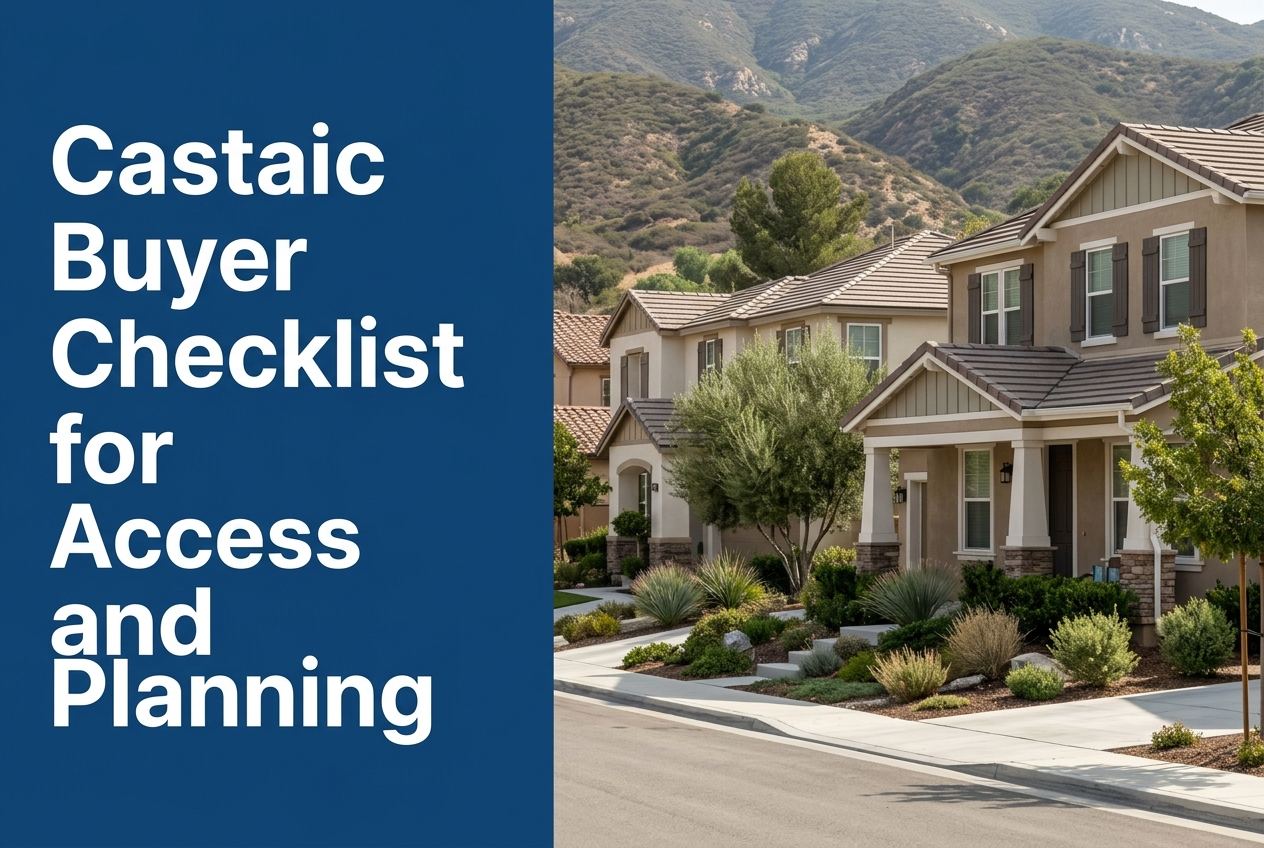
Part of Living in Castaic
Overview
Buyers should start by checking three things in Castaic: how the property is accessed, which planning rules apply, and what district or map layers may affect the land. That review can help you understand the property before you make an offer.
For Castaic, the key is to look beyond the home itself. We would help a buyer confirm whether the parcel sits in incorporated Santa Clarita or unincorporated Los Angeles County, then review the land use and district tools that shape the property.
We put the rest of it together here: the Castaic market page we keep updated.
Key Takeaways
- Confirm whether the property is in the City of Santa Clarita or in unincorporated Los Angeles County, because different planning rules may apply.
- Check road access, circulation streets, and any nearby transit options before deciding how the property fits your daily routine.
- Review the Santa Clarita Valley Area Plan and city planning documents together when the property is in the valley, because the two systems are part of one larger planning picture.
- Look at special district maps and zone information, since landscape maintenance districts can affect a property even when they do not change the home itself.
- Use official city and county map tools before relying on online listings, because addresses and neighborhood labels do not always show the full planning picture.
How do you confirm whether a Castaic property is under city or county planning rules?
The first step is to identify the property’s jurisdiction. In the Santa Clarita Valley, the City of Santa Clarita and Los Angeles County each have planning tools that may apply depending on where the parcel sits. The county’s Santa Clarita Valley Area Plan applies to unincorporated parts of the valley, while the City of Santa Clarita has its own General Plan.
That matters because buyers should not assume that every Castaic property follows the same rule set. We would compare the parcel location against official city and county planning maps, then confirm which agency controls land use, zoning, and long-range planning for that address.
What should buyers look for in access and circulation?
Access is more than a driveway. Buyers should check how a property connects to the main road network, whether it is reached by named circulation streets, and whether access is direct or depends on nearby connectors. The official zone pages in the city’s district information show how some neighborhoods are reached from specific roads, which is a reminder that access is a real property detail, not just a map label.
For a Castaic buyer, the practical question is how you will enter and leave the property each day. We would look at the approach to the parcel, the road category, and whether the lot depends on a route that may affect convenience for commuting, deliveries, visitors, or future project planning.
Why do planning maps matter before you write an offer?
Planning maps help buyers understand what the land is intended to support. The county’s Santa Clarita Valley Area Plan provides goals, objectives, policies, and implementation actions for unincorporated areas of the valley. It was adopted in 2012 and is meant to work with the City of Santa Clarita General Plan as part of a unified vision for the valley.
For a buyer, that means the land around a Castaic home may be guided by more than the current house on the lot. We would review the land use layer, the zoning layer, and any related plan documents to see whether the parcel’s surroundings are already settled by plan or may still be shaped by long-range policy.
What property considerations should you check besides the home itself?
Buyers should check district and parcel details that can affect ownership costs or maintenance. The City of Santa Clarita maintains Landscape Maintenance District zones, and those zones are financially independent with unique identifying numbers and names. Some zones are city zones, while some began as county zones, which is why the zone name and number matter.
This does not mean every Castaic property has the same district setup. It means a buyer should verify whether the parcel falls inside any special district or maintenance zone and then ask what that district covers. That kind of review helps you understand the property as a piece of land, not only as a house.
How should buyers use trails, open space, and nearby public features in their review?
The county plan notes a Trails Map and a later maintenance project that incorporated the Board-adopted Castaic Trails Plan Map into the Santa Clarita Valley Area Plan. That is useful for buyers because trails, access routes, and land planning can be connected in long-range documents even when they are not part of the home site itself.
The City of Santa Clarita also describes more than 100 miles of off-street trails and paseos across the city, plus open space throughout the valley. A buyer should use those public resources as part of a broader location review, especially when thinking about daily movement, recreation, and how the property connects to the surrounding area.
What transportation questions should Castaic buyers ask?
The city says Santa Clarita Transit offers trip options within the city, and it also notes that the city is home to three Metrolink stations. Even if a particular Castaic property is not next to a station or a transit stop, transportation access still matters because it shapes how a buyer moves around Santa Clarita and beyond.
Buyers should ask how far the property is from practical travel routes, where transit connections fit into the commute, and whether the road network supports the way they expect to live. For homes tied to work in Los Angeles or elsewhere in Santa Clarita, those questions can be just as important as interior features.
How can buyers avoid missing hidden planning issues?
Start with official sources, not the listing sheet. City and county websites are where you can confirm maps, district names, and planning documents. The county site also provides public-facing tools and contacts for planning questions, while the city site offers service and community information that can help you understand the larger area.
We also remind buyers to watch for simple mismatches. A neighborhood label can sound clear, but the parcel may still sit in a different district or planning area. We would verify the address, the parcel, and the map layers together so the property you are evaluating matches the rules that actually govern it.
What is the simplest due diligence path for a Castaic buyer?
A clean review can follow four steps. First, confirm the parcel location and jurisdiction. Second, check the applicable planning document and zoning layer. Third, review access, roads, and any nearby transit or trail connections. Fourth, look for special districts or maintenance zones that may apply to the property.
That approach keeps the process practical. It helps a buyer focus on the questions that affect ownership and daily use instead of getting lost in broad neighborhood talk. For a Castaic purchase, that is often the difference between a quick guess and a solid decision.
Sources
- City of Santa Clarita: City Profile
- Los Angeles County Planning: Santa Clarita Valley Area Plan
- santaclarita.gov
The detail behind that sits in our buyer process from first search to keys. The next step is usually to look at our current listings and see how they hold up against what you just read.