The selling process
How We Sell a Home
Pricing, prep, marketing, launch week, escrow, and the paperwork California requires. The whole thing, in order, with nothing skipped over.
The short version
Most agents put your home on the MLS and hope the right buyer finds it. That is not a strategy. It is a bet, and it is your money on the table.
We run a launch instead. Every listing moves through four pillars: Equity, Presentation, Impact, and Campaign. Each one exists to put your home in front of the right buyer at the right moment, with a real plan behind it.
Below is the whole thing in order, including the parts agents usually skip past: what the disclosures actually are, what happens during escrow, and where deals fall apart. If you would rather just talk it through, call or text us at 661-219-5517.
What is it actually worth?
Equity: Know exactly where you stand
Pricing is not a comps printout. Before we set a number, we look at three things.
What has actually sold. Closed sales in the last 90 days of homes genuinely like yours: same neighborhood, similar square footage, similar condition, similar lot. Not the highest number on your street, and not what your neighbor listed at and then reduced twice.
What you are competing with right now. A buyer looking at your home this weekend is looking at four others. If one of them is nicer than yours at the same price, you are the one that helps them decide to buy the other house. We look at the active competition honestly, including the ones that will not sell, because they still shape what buyers think is normal.
Where the search brackets fall. Buyers search in round numbers. A home priced at $1,025,000 is invisible to everyone whose maximum is a million, and that is a large group. Sometimes the right move is to price just under a bracket and let more people find you.
Michelle has a real gift for numbers and Jon's background is in accounting, so you get the math, not just the conclusion. Then you get a written net sheet: sale price at the top, commission, transfer tax, escrow and title, the county fees, your loan payoff, and the number that actually lands in your account at the bottom. If that number does not work for you, we would much rather find out in your kitchen than three weeks into escrow.
Want the number before you decide anything? Request your home value.

How We Sell a Home
Prep: What to fix, and what to leave alone
This is where sellers most often waste money, usually by doing too much. We walk the house with you and sort everything into three piles.
Do it. Paint, landscaping, decluttering, deep cleaning, replacing dated light fixtures and cabinet hardware, and anything that photographs badly. These are cheap, they are fast, and they change the first photo a buyer sees, which is the only photo most of them see.
Decide together. Carpet, light staging, a termite report ordered up front. Each of these depends on your home and your timeline, and we will tell you which ones we think are worth it for your house specifically.
Skip it. A kitchen remodel done specifically to sell. New windows. A pool. Big-ticket projects almost never return what they cost when the motive is resale, and they delay your launch by months. We will say so.
We refer you to trusted vendors we have worked with for years, so you are not the one hunting down a painter or working out who to call. You still hire them and schedule them, we just make that part easy. And if you would rather sell the house exactly as it sits, that is a completely legitimate choice, and we will price and market it with the same care either way.
Prep: What to fix, and what to leave alone
The Saturday that pays for itself
Presentation: Control the story a buyer sees
Buyers do not buy a house. They buy the story they tell themselves walking through it, and that story starts on a phone screen while they are half paying attention to something else. Whoever controls that first impression controls what the home is worth.
Before your home goes public it gets:
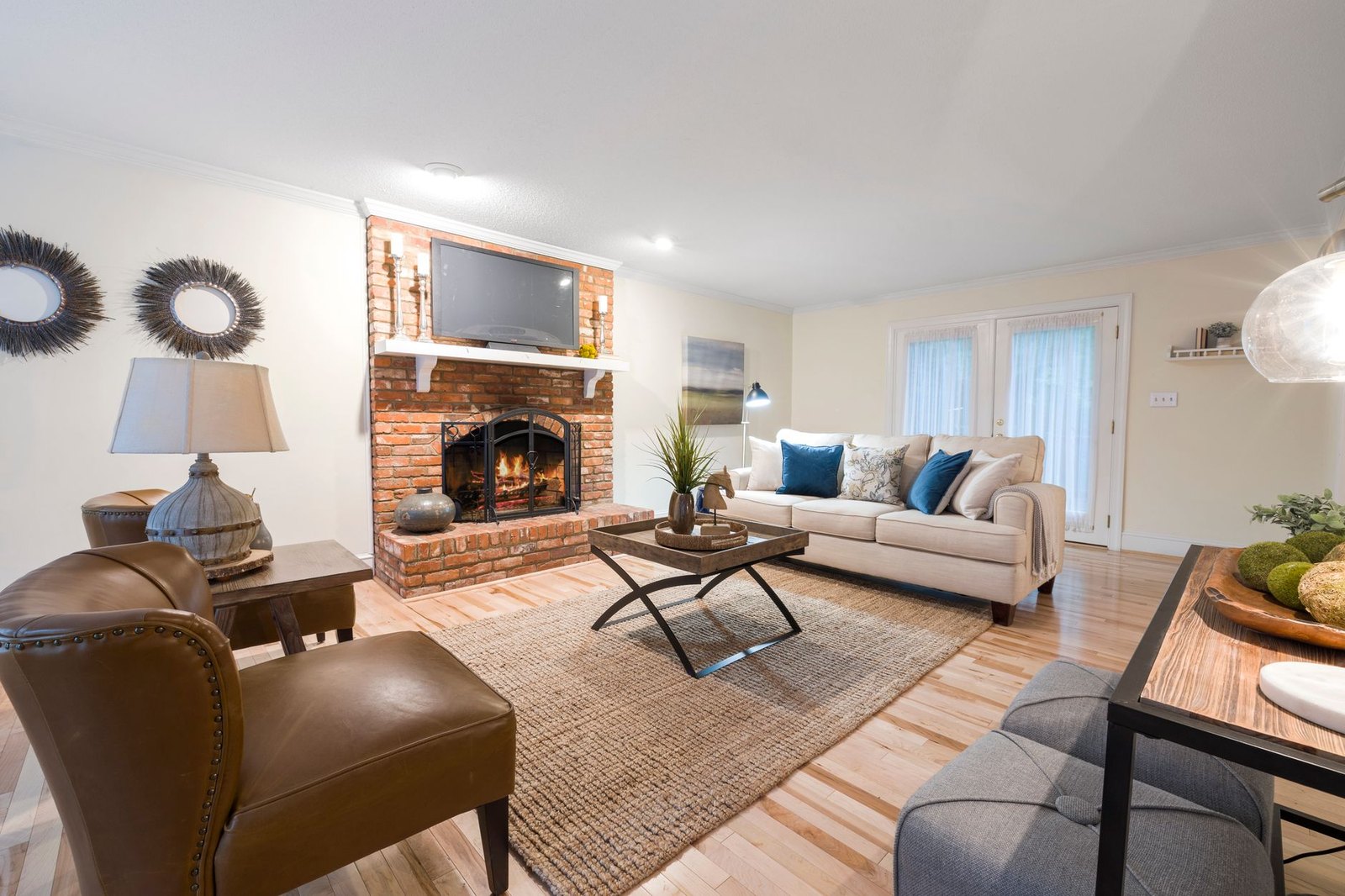
- Professional photography, shot at the right time of day for your home's light, not whenever the photographer had an opening.
- Video, so a buyer can understand how the rooms connect, which photos never quite show.
- Aerial photos, which matter more than people think in this valley, where the lot, the view, and what backs up to you are often the whole story.
- A 3D tour, so out-of-area buyers can walk it at midnight from another time zone.
- A floor plan, which is the single most requested thing buyers say listings are missing.
- Its own website, built for your specific home, not a template with your address dropped in.
We put real thought into the description, because it is where you either give a buyer a reason to come and see the home or hand them a list of features they already saw in the photos.
Impact: Reach the buyers who are not searching yet
This is what separates a launch from a listing, and it rests on one fact: a large share of the best buyers for your home are not looking today. They are people whose lease is up in four months, whose second baby is coming, whose parent just moved in. They are not on the MLS this week. A listing that only waits for MLS traffic never reaches them.
So we go find them. Paid online advertising and targeted marketing put your home in front of tens of thousands of people in and around this valley, chosen by where they live, what they have been looking at, and what stage of life they are in. Then a just-listed email goes to thousands more: past clients, the people they referred, and the agents who actually sell in your neighborhood.
The agent-to-agent part matters more than most sellers realize. In a normal week, a handful of agents in the Santa Clarita Valley are actively working with buyers in your price range. Reaching those specific people is worth more than an abstract idea of maximum exposure.

Campaign: The first ten days, on a real calendar
You do not list a home with us. You launch it. And the launch matters because of how buyer attention actually behaves: every single person searching for a home like yours sees it in the first few days, and the ones who have been looking for months move first. After that, you are down to the trickle of new buyers entering the market each week.
So the first days run on a real calendar:
- Agent caravan, so the agents with buyers see it before the public does.
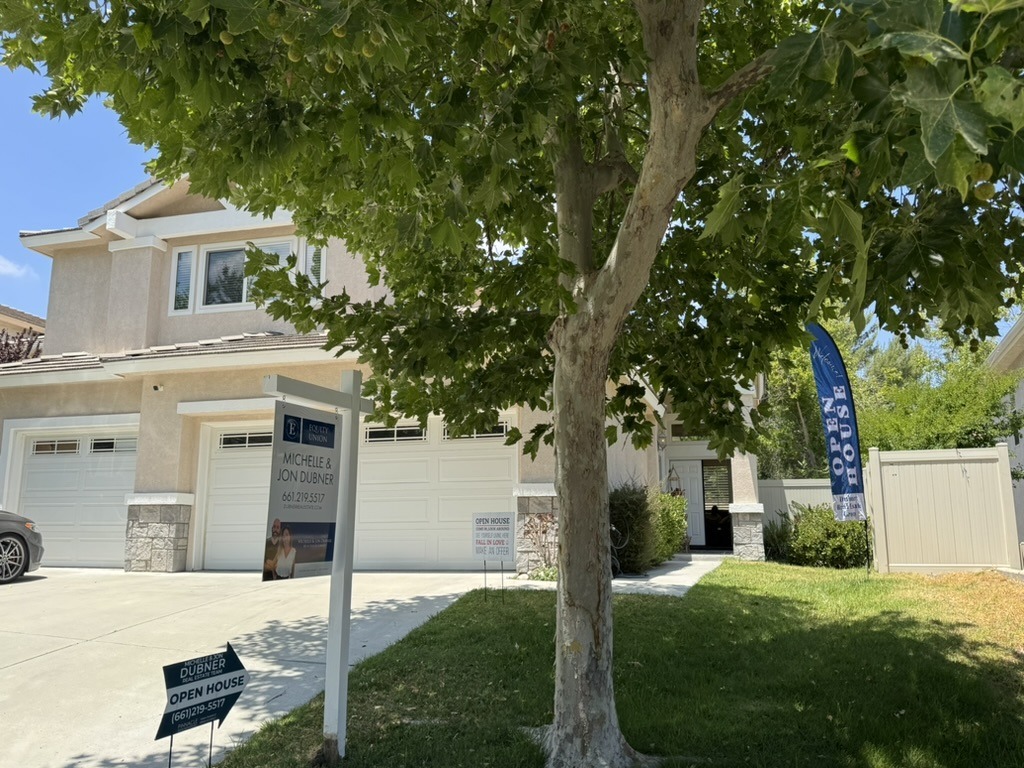
- A neighborhood open house, with the neighbors personally invited and flyers delivered. Neighbors are not nosy, they are recruiters. A surprising number of sales come from someone's sister, coworker, or friend who always liked the street.
- Follow-up on every showing. Every one. This is the step almost nobody does, and it is where attention turns into offers. An agent who showed your home on Saturday and heard nothing from anyone by Tuesday has already moved on.
And you get regular updates with real showing activity and real feedback, including the feedback you would rather not hear. If three buyers in a row say the same thing about the kitchen, you need to know that in week one, while you can still do something about it.
Offers: Price is only one of the terms
When offers come in, the highest number is not automatically the best offer, and picking wrong is expensive. We look at all of it with you.
The financing. Cash closes fastest and does not depend on an appraisal. A conventional loan with 20 percent down and a fully underwritten pre-approval is strong. FHA and VA are perfectly good loans, and they come with their own appraisal requirements that can affect a home with deferred maintenance. We read the lender letter, and if we do not know the lender, we call them.
The contingencies. Every contingency is a door the buyer can walk back out of. The standard form defaults to 17 days each for investigation, appraisal, loan, and homeowner’s insurance, and shorter is better for you. A buyer who has shortened theirs is telling you something real, but only if they can actually perform: a ten-day loan contingency from a buyer whose lender has not started underwriting is a promise nobody can keep. So we look at whether the shortened timeline is backed by a fully underwritten pre-approval or is just a number typed into a blank. A buyer whose offer is contingent on selling their own home is carrying a risk you should be paid for.
The deposit. An earnest money deposit is commonly one to three percent of the price. A larger deposit signals a more serious buyer, because it is their money at risk if they walk away without cause.
The dates. When do they want to close, and does that work for where you are going? If you need time after closing to move, a rent-back can be worth real money to you, and a buyer who can offer one may beat a higher price that cannot.
Whether they can actually close. The highest offer is worth nothing if it falls apart in week three. We call the buyer's lender and confirm they are genuinely approved for that amount, not just pre-qualified off a phone call. We ask for proof of funds and look at whether the down payment and closing costs leave them anything at all, because a buyer who is scraped to the last dollar cannot absorb a repair request, and that is exactly when a deal gets shaky.
In a multiple-offer situation we do not just take the top number. The strongest offer is not always the highest one. We go back to the best few and give them the chance to improve, and we tell you plainly what we think each one will actually do once inspections start.
Offers: Price is only one of the terms
Every date on the calendar, tracked
Escrow: What actually happens in those 30 to 45 days
Once you accept an offer, California escrow on a financed purchase commonly runs 30 to 45 days. Cash can close in one to two weeks. Here is what is happening inside that window, roughly in order.
Days 1 to 3. Escrow is opened and the buyer wires their deposit. The clock on every other date starts from the day the contract is accepted, not from when anyone gets around to it.
Days 1 to 7. Your disclosures go to the buyer. In California that is a real package, and the next section covers what is in it.
Days 1 to 17. The buyer's inspections. A general home inspection, usually a termite inspection, and often specialists: roof, sewer line, foundation, pool. On the standard C.A.R. purchase agreement the default is 17 days for all four buyer contingencies: investigation, appraisal, loan, and homeowner's insurance. Every one of those is a blank the parties negotiate, so yours may differ. Read what you signed.
Around day 10 to 17. The request for repairs. This is the second negotiation, and it is the one that catches sellers off guard, because emotionally the house already feels sold. The best defense is knowing your own house and pricing it honestly from the start. When the roof is already reflected in the price, you can say so, and you are not negotiating against a surprise.
By day 17. The appraisal. The appraisal contingency runs the same 17 days as the others, so it is removed on day 17 alongside them unless you negotiated something different. If the appraisal comes in below the contract price on a financed deal, the lender will only lend against the lower number, and then there is a gap to solve: the buyer brings cash, you come down, you split it, or the deal ends. This is where an honest price at the start pays for itself.
Day 17. Contingency removal. In California nothing removes automatically. The buyer signs a written Contingency Removal form. Until they do, their contingency is alive no matter what the calendar says. Once contingencies are removed, their deposit is genuinely at risk, and the deal is far more likely to close.
Days 17 to 25. This is the stretch where not much happens in your world, and a lot happens behind the scenes. The lender and the escrow officer are crossing every t: final underwriting, loan approval, and getting loan documents over to escrow so everything is ready to transfer on time.
It is also when you can really start packing. Before contingencies are removed, pack the things that do not change how the home shows, closets, the garage, storage, anything a buyer will not see. If the deal comes back on the market we still want it looking its best. Once contingencies are removed, pack freely and start getting ready to move.
The last week. Loan documents arrive at escrow. The buyer does their final walk-through, then signs their loan documents. The lender funds the loan, and the next day it records with Los Angeles County, which is the day escrow closes. In California you are officially closed when the deed records, not when everyone signs.
Keys transfer on the possession date you agreed to, which is usually the day escrow closes. Every so often a negotiation leaves you in possession for a few days after close, and if that is what you need, we ask for it up front rather than hoping for it later.
We track every one of these dates for you and tell you before each one arrives, not after.
The disclosures California requires, in plain English
California has some of the most demanding seller disclosure rules in the country, and this is where sellers get into legal trouble years later. The rule underneath all of it is simple: if you know something that affects the value or desirability of the home, you have to tell the buyer. When in doubt, disclose. Nobody has ever been sued for telling the truth about their own house.
The main pieces:
- Transfer Disclosure Statement (TDS). The big one. What you know about the condition of the home, item by item. Repairs, leaks, additions, what works and what does not.
- Seller Property Questionnaire (SPQ). Goes further than the TDS: neighborhood noise, disputes, insurance claims, deaths on the property within the last three years, pets, and more.
- Natural Hazard Disclosure (NHD). Whether the property sits in a flood zone, a fire hazard severity zone, an earthquake fault zone, or a seismic hazard zone. In parts of this valley the fire designation is a real one, and it affects what a buyer will pay for insurance.
- Mello-Roos and special assessments. Many newer Santa Clarita Valley neighborhoods sit in a Community Facilities District, and that bond shows up on the property tax bill every year. A buyer needs the actual number, not a shrug.
- HOA documents. If you have an HOA, the buyer gets the governing documents, the budget, the reserves, the minutes, and any pending special assessment. We order the package the day escrow opens, not before. It usually takes 10 days to 2 weeks to arrive, which lands it right before contingency removal. It costs $500 to $1,000 and it expires, so ordering it early can mean paying for it twice.
- Lead-based paint, for any home built before 1978. Federal, not state, and not optional.
- Smoke alarms, carbon monoxide detectors, and water heater strapping. California requires all three at transfer. Cheap to fix, and easy to forget until three days before closing.
We prepare this package with you and go through it line by line, so nothing gets guessed at.

Where deals actually fall apart, and how we keep yours together
Most escrows that die do it for one of five reasons, and four of them are preventable.
The inspection. A buyer finds something big and either walks or asks for a credit that changes the deal. Managed by knowing your own house, disclosing what you know, and pricing it honestly, so a finding confirms the price rather than upending it.
The appraisal. The home does not appraise at the contract price. Prevented mostly by pricing it right, and managed by giving the appraiser the comps and the upgrade list rather than hoping they find them.
The loan. The buyer's financing falls through, often because something changed on their end, sometimes because they were never fully underwritten to begin with. Prevented by vetting the pre-approval before you accept the offer, not after.
Cold feet. Buyer's remorse is real, and it shows up around day ten. Prevented by steady communication, because a nervous buyer who feels informed usually stays, and one who feels ignored usually leaves.
Something nobody could have known. A job loss, a death, a family emergency. Sometimes it is nobody's fault. When it happens, we put the home back on the market quickly and honestly, and we tell buyers exactly why it came back, because the alternative is that everyone assumes the worst.
Where deals actually fall apart, and how we keep yours together
The careful part
Where to start
You do not have to be ready to list to have this conversation. Plenty of people talk to us a year before they move, and some of them we end up telling to stay put.
Start with a real number: request your home value, and we will walk you through what it means. Or just call or text 661-219-5517.
Selling in a particular situation? We have a page for each one, with the law and the timeline that actually applies: probate and trust, divorce, selling as a senior, and downsizing. Buying at the same time? Here is how we handle the buying side.

Frequently Asked Questions
How is this different from how most agents list a home?
How long does it take to sell a house in California?
What does it cost to sell a home in Los Angeles County?
Should I get a pre-listing inspection?
What disclosures do I have to give a buyer in California?
What happens if the appraisal comes in low?
Do I have to make the repairs a buyer asks for?
Should I sell first or buy first?
How will I know what's happening with my listing?
Do you help me buy while my home is being marketed?
Keep exploring
Ready to make your move with Dubner Real Estate Group?

Meet the team
The team running your launch
We are Michelle and Jon Dubner, husband and wife, and Dubner Real Estate Group is ours. Our team is here to serve you: to understand what you are hoping for, walk you through it step by step, and make sure you get there. Michelle answers her own phone and is quickest by text, so ask us anything, at any point, however small it feels.
Michelle Dubner DRE #01496647 Jon Dubner DRE #02118617 Equity Union