For sellers
Selling your home in Los Angeles County
Whatever is behind the move, there is a version of this that fits your situation. Start with the one that sounds like you, then see what it looks like in your own neighborhood.

Seller resources

Selling Your Home
Sell for the most the market will pay, without the process taking over your life.
Learn more →
Downsizing
Less house can mean more freedom. We help you take that step at a pace that feels right.
Learn more →
Selling Your Home as a Senior
For homeowners 55 and older moving to a senior community, a smaller home, or closer to their kids, with patience at every step.
Learn more →
Selling a Home During Divorce
A hard season deserves a calm, fair process. We keep things steady so you can move forward.
Learn more →
Probate and Trust Sales
Selling a loved one's home is hard. We carry the details so your family has room to breathe.
Learn more →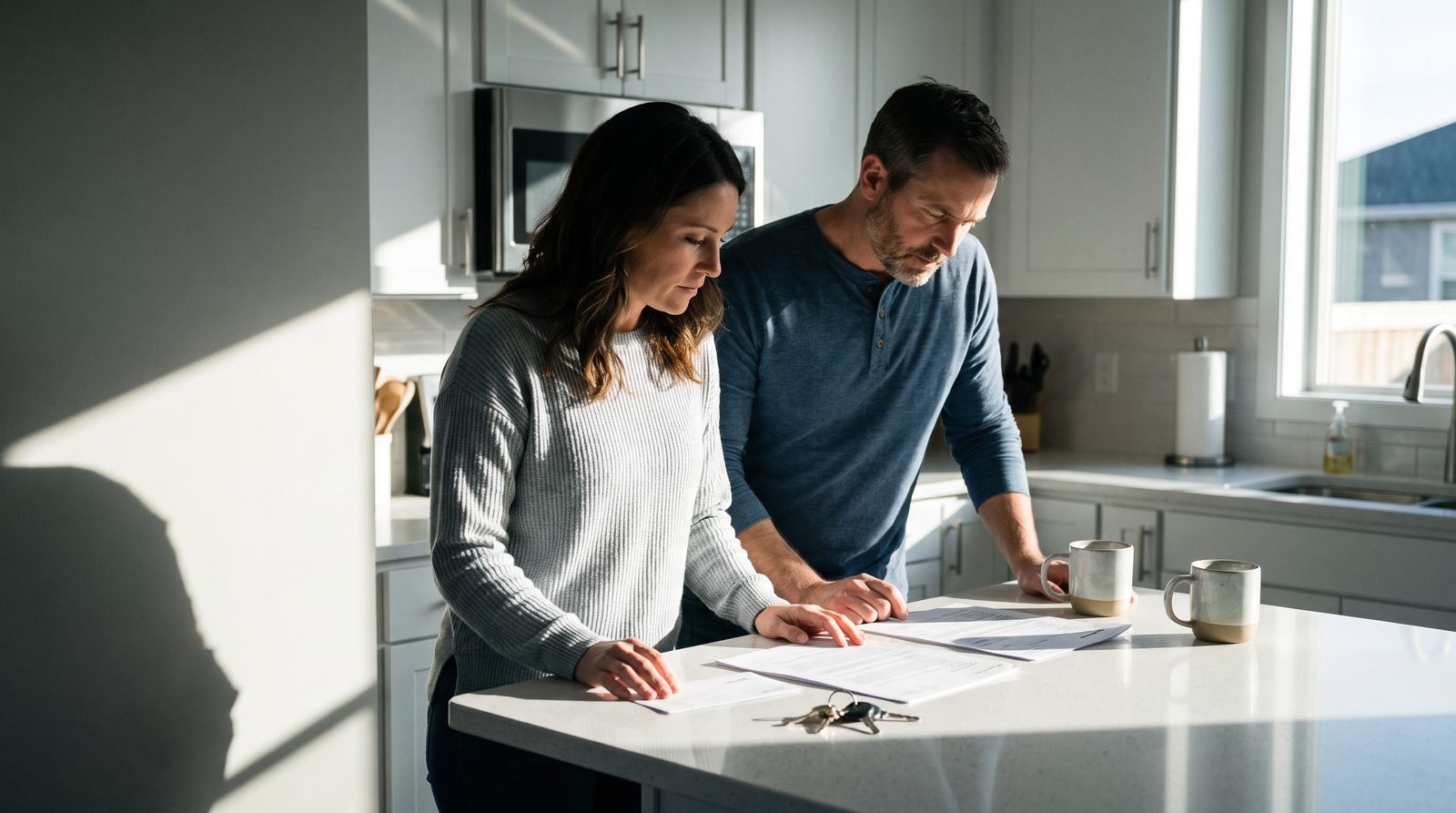
What Your Home Is Worth
Find out what your home is worth today, with a real number from people who know your neighborhood.
Learn more →By neighborhood
Selling in your exact area
Start with the question you actually have
Most people who land on a page like this are not ready to list. They are trying to answer one question, quietly, before they tell anyone. What is it worth. Can we afford the next one. Do we have to fix the bathroom first. How long is this going to take.
So this page answers those, plainly, before it asks you for anything. If you want the short version: your number comes from what has actually sold near you, what is competing with you right now, and the real condition of your home. Everything else is detail.
And if what is behind your move is harder than a simple upgrade, a divorce, a parent's estate, a downsize you are not entirely ready for, there is a page written for that specific situation further down. Those are not marketing categories. They are genuinely different transactions with different timelines and different people who have to agree.
What is it actually worth?
What your home is actually worth
An online estimate is a guess built from public records. It has never been inside your home. It does not know you redid the kitchen, or that the house backs to a wash, or that your neighbor's sale closed low because it was a family transfer.
A real number comes from three things:
- What has genuinely sold. Closed sales in the last 90 days of homes actually like yours. Same area, similar size, similar condition, similar lot. Not the highest number on your street.
- What you are competing with today. A buyer looking at your home this weekend is looking at four others. If one of them is nicer at the same price, you are the house that helps them choose the other one.
- Where the search brackets fall. Buyers search in round numbers. A home priced at $1,025,000 is invisible to everyone whose maximum is a million. Sometimes the right move is to price just under a bracket and let more people find you.
Michelle has a real gift for numbers and Jon's background is in accounting, so you get the math, not just the conclusion. Then you get a written net sheet: sale price at the top, every cost itemized, and the number that actually lands in your account at the bottom. If that number does not work for you, we would much rather find out in your kitchen than three weeks into escrow.
Tell us about your home and we will put your number together.

What it costs to sell here, honestly
Four things come off the top, and none of them should be a surprise on closing day.
Commission. Negotiable, and since the 2024 changes it is negotiated twice: once for what you pay your own agent, and separately for what, if anything, you offer a buyer's agent. Those are two different decisions now. We put both in writing before you sign anything.
Transfer tax. Los Angeles County's documentary transfer tax is $1.10 per $1,000 of sale price, so roughly $935 on an $850,000 sale. Only five cities in the county add a tax of their own, and as of September 2026 they are Los Angeles, Santa Monica, Culver City, Pomona, and Redondo Beach. Santa Clarita is not one of them. The City of Los Angeles is, and its Measure ULA tax is a much larger number on higher-priced sales, so if your home is inside city limits that belongs in your math early.
Escrow and title. Fees that scale roughly with price, plus a county recording fee.
Getting ready, and what the buyer asks for after inspections. Paint, landscaping, cleaning, and then whatever credits or repairs you agree to once they have inspected. This is the bucket that surprises people, and it is the one good preparation shrinks the most.
Taxes on the gain are a separate question and a real one. Ask a CPA. The short version is that federal law lets many sellers exclude a significant amount of gain on a primary residence, and plenty of sellers here owe nothing at all, but whether you qualify depends on your own facts.

How long the whole thing takes
Two clocks run, and people tend to only think about the second one.
Before you list. This is the part you control, and it is where the result gets decided. Preparation, photography, and a launch planned on a real calendar. Rushing it to save two weeks routinely costs more than two weeks of carrying the house.
After you accept an offer. Escrow on a financed purchase in California commonly runs 30 to 45 days. Cash can close in one to two weeks. Inside that window the buyer's contingencies default to 17 days on the standard C.A.R. agreement, though every one of those is a blank the parties negotiate.
What actually stretches a timeline is almost never the market. It is an HOA document package that takes three weeks to arrive, a payoff nobody requested early, or a repair negotiation that starts from a surprise. Those are all preventable.
How long the whole thing takes
From listed to moved
Whatever is behind the move
A sale where two people have to agree on everything is not the same transaction as a straightforward upgrade. Neither is settling a parent's estate while your siblings live in three different states, or downsizing out of the house you raised your family in.
These are the situations we have gone and gotten trained for specifically, rather than learning on somebody's transaction:
- Selling your home, the straightforward version, done properly.
- Probate and trust sales, where court and trustee timelines drive everything.
- Selling during a divorce, handled neutrally, with both sides getting the same information at the same time.
- Downsizing, sequencing the sale and the next place so you are never homeless in the middle.
- Selling as a senior, at a pace that suits you, with protection from pressure.
- Finding out what it is worth, with no obligation to do anything about it.
- Selling a luxury home, where the comparable sales rarely tell the whole story.

Frequently Asked Questions
How much is my home worth right now?
What does it cost to sell a home in Los Angeles County?
Is the commission negotiable?
Do I need to fix up my house before selling it?
How long does it take to sell a house?
Should I sell first or buy the next one first?
Will I owe taxes when I sell?
Can I keep my property tax base if I move?
Do you only sell in Santa Clarita?
What if I am not ready to sell yet?

Meet the team
The team that would sell your home
We are Michelle and Jon Dubner, husband and wife, and Dubner Real Estate Group is ours. Our team is here to serve you: to understand what you are hoping for, walk you through it step by step, and make sure you get there. Michelle answers her own phone and is quickest by text, so ask us anything, at any point, however small it feels.
Michelle Dubner DRE #01496647 Jon Dubner DRE #02118617 Equity Union
Reading for sellers
All 30 articles →
2026-09-14 · 9 min
What Santa Clarita Sellers Should Verify First

2026-09-12 · 9 min
Santa Clarita Seller Pricing and Launch Strategy

2026-09-10 · 8 min
What Paperwork Santa Clarita Sellers Need Before Listing

2026-09-10 · 8 min
What to Fix Before Your Santa Clarita Listing Photos
2026-09-08 · 7 min
What Santa Clarita Sellers Should Verify
2026-09-06 · 9 min
How to Set the First List Price on a Santa Clarita Home
Keep exploring
Ready to make your move with Dubner Real Estate Group?