Luxury homes · Los Angeles County
Luxury Homes, and the Price No Comp Sheet Can Give You
Above a certain price the buyer pool is small, the comparable sales stop being comparable, and financing, insurance and transfer taxes all change. Here is how we handle each of those.
A Home Like Yours Doesn't Sell Like the One Down the Street
Maybe it's the view that stops people at the back door. Maybe it's the land, the guest house, or the custom details you chose one by one. Whatever makes your home special also makes it harder to sell well, because there may not be another home quite like it anywhere nearby.
At this price, every decision carries more weight. The asking price, who gets through the front door, how the home is shown, and how the negotiation goes can each move your result by real money. You also have a life to run, and you want your privacy protected along the way.
Michelle has been doing this since 2004 and is ranked by RealTrends in their 2025 America's Best Real Estate Professionals list, in the top 1.5% of agents nationwide. Here's how we handle a luxury sale or purchase, step by step.
Let's talk about your next move
Where Luxury Lives in Los Angeles County and the Santa Clarita Valley
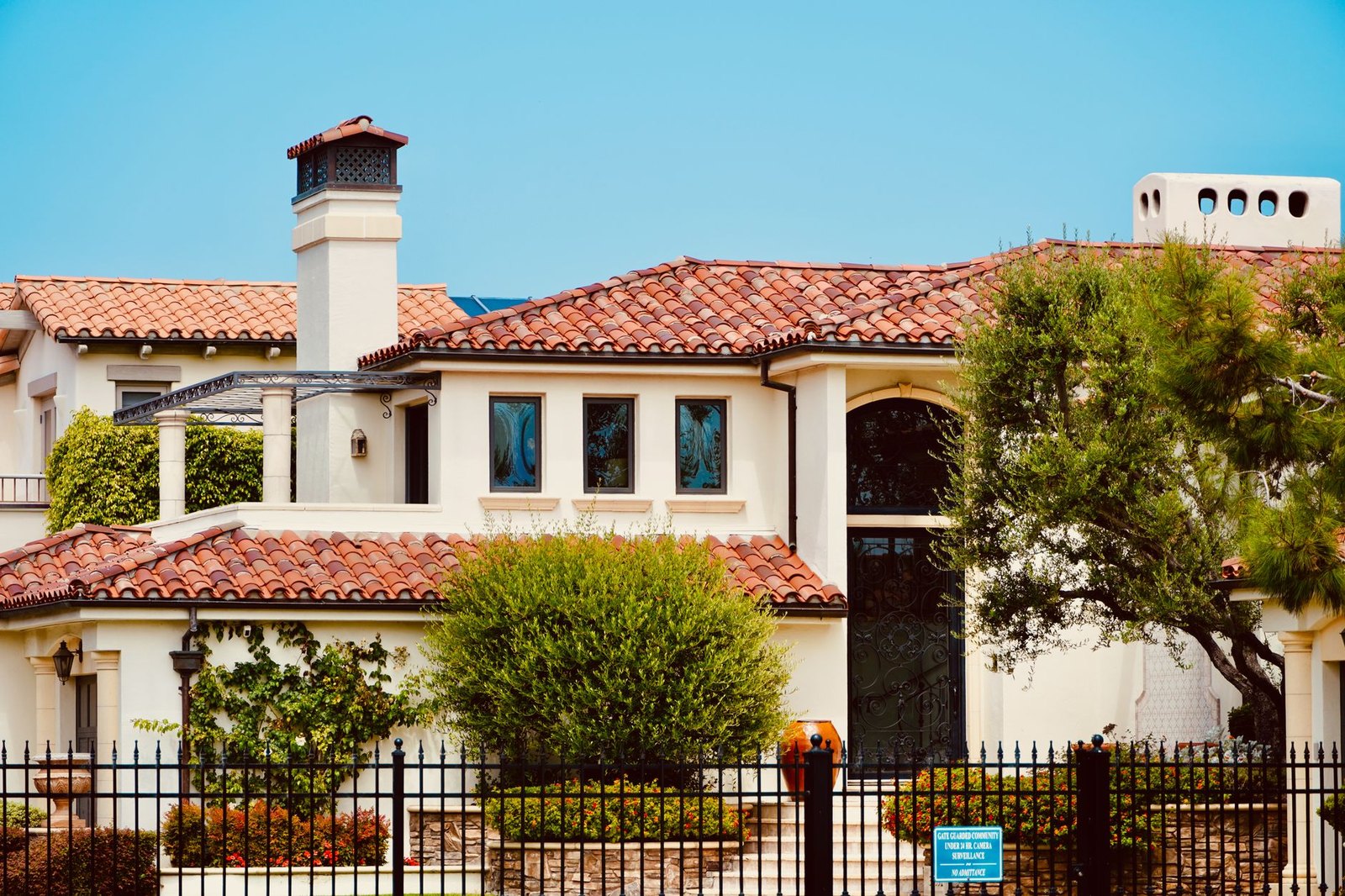
Luxury here doesn't look one way. It changes from community to community. Some of the best views around are on the hillsides around Central Park in the Bouquet Canyon area of Saugus, up in the Stevenson Ranch hills, in the new construction in Castaic, in Tesoro, and in West Hills.
- Valencia. Westridge and The Woodlands sit along the golf courses at The Oaks Club at Valencia and Valencia Country Club, and they hold some of Valencia's most expensive addresses. The Summit has hillside homes with views. In Northpark and Northbridge, larger homes back to the paseos, with mature trees and established landscaping. Behind the gates in West Hills and Tesoro, you'll find newer homes, many with next-gen floor plans: a private suite with its own entrance, living room, bedroom, bathroom, and laundry, so everyone under one roof still has their own space. Bridgeport wraps around a private lake.
- Canyon Country. Up Sand Canyon, custom homes sit on large lots with room for horses, close to the fairways of Sand Canyon Country Club. In Fair Oaks Ranch, gorgeous homes with views sit behind the gates.
- Newhall. South of Lyons Avenue, Bella Vista Estates and Hidden Valley hold custom and estate-style homes with privacy and room to breathe.
- Saugus. Hillside homes sit in the neighborhoods around Central Park in the Bouquet Canyon area. North of Copper Hill and up in Skyline Ranch, newer homes bring larger floor plans, larger lots, and some gated streets.
- Stevenson Ranch. A small number of custom homes sit on larger lots up in the hills, some of them behind gates.
- Castaic. Hasley Canyon offers ranch-style and custom homes on large lots, many zoned for horses, often with pastures and stables already built. At Williams Ranch, new construction by Williams Homes brings huge homes, fantastic garages, large lots, and spectacular views.
Across Los Angeles County, we've also helped clients buy and sell homes over $1 million in Burbank, Granada Hills, and Los Angeles, and just over the county line in Moorpark. Here is how we work the rest of the county, including what changes when you cross a city line.
The practical reason this list matters: a home in one of these pockets is not competing with the tract two miles down the hill, and pricing it as though it were is the single most expensive mistake available to you. Which is the next section.
Pricing a Home That Has No Twin
With a tract home, the house next door often has the same floor plan and a recent sale to compare. A one-of-a-kind home rarely gets that. The closest sale might be a mile away, a year old, and missing the view, the acreage, or the finishes that make yours different.
That's where a guess gets expensive. An overpriced luxury home sits, and every extra week invites buyers to wonder what's wrong with it. Underpricing is quieter, and that money never comes back.
This is where our strengths line up. Michelle is analytical to the core and loves digging into sales data, statistics, and the details that move a value. Jon's background in accounting adds a careful second review of every adjustment. We weigh your lot, view, condition, custom features, and privacy against the sales that genuinely compare, then walk you through our reasoning line by line.
If a number can't be defended, we'll tell you plainly. We'd rather have that honest conversation before your home goes on the market than after it has sat for months.
The place to start is the number itself. Ask us what your home is worth and you will get the reasoning, not just a figure, with no obligation to list anything.
Privacy and Discretion From the First Conversation
Selling a luxury home can put a lot of your life on display. So we start by asking what you're comfortable sharing. Some sellers don't want family photos, a home office, or security features anywhere in the pictures. Others want showings only at certain times, or only while they're away. Your preferences shape the plan from day one.
Your home is your private space, so we protect it. Before any private showing, we ask the buyer for proof of funds or a lender approval letter. That way the people walking through your rooms are people who can truly buy your home, and your privacy stays in good hands. We'll also talk honestly about the trade-off between keeping a sale quiet and reaching every buyer who might pay the most, so you choose with clear eyes.
How Your Home Gets Presented
A buyer at this price decides whether your home is worth a Saturday before they ever call, and they decide it on a screen, so that first photograph is doing the work of a first walkthrough. We plan the story before anything goes public, walk the house with you first and tell you honestly what to highlight, what to store and what to leave exactly as it is, and our own vendors do the work. The full presentation your home gets is here.
How Your Home Gets Presented
The detail that closes the deal
Marketing Aimed at the Few Buyers Who Can Actually Buy It
Here is what makes the top of the market genuinely different. Far fewer people can buy your home, so reaching the most people is not the goal. Reaching the right ones is. Your buyer might be moving up inside the Santa Clarita Valley, trading a pricier Los Angeles address for land and a view, or relocating from out of the area and seeing your neighborhood for the first time on a laptop at eleven at night.
So the plan starts with a real answer to who that person is and where they are, and then goes and finds them. Paid online advertising and targeted marketing reach tens of thousands of people, including buyers who were not actively searching at all, and a just-listed email goes to thousands more. Local agents walk it on caravan. When it fits your privacy plan, the neighbors get a personal invitation and a flyer, because the neighbor who has always liked your street usually knows somebody who has been trying to get onto it. The reach side of the plan is here.
Then every inquiry and every showing gets followed up, and the real activity and the real feedback come back to you on a schedule. At this price a quiet week is not something to wait out politely. It is information, and you should have it while there is still time to use it.

Negotiating When the Numbers Are Bigger
At this price, a small percentage is real money. Michelle is a Certified Real Estate Negotiator, and we walk into every negotiation with the numbers already worked out. We know which terms matter most to you, what an inspection request is really worth, and where there's room to give without giving away your result.
Unique homes can also be harder to appraise, because the appraiser has fewer comparable sales to work from. We get ahead of that by sharing the sales and upgrades that support your price, so a low appraisal doesn't catch anyone off guard.
Negotiating When the Numbers Are Bigger
Terms, not only price
Buying at This Level Without the Surprises
When you are buying a home like this, the things that cost you later are almost never in the listing photos. So we go and check them before you are attached to the place. We pull HOA dues and Mello-Roos before you tour. On horse property we confirm the zoning for that exact lot rather than trusting the barn that is already standing on it. Near open hillsides we get insurance quotes early, for the reason in the section below. And we confirm school assignments with the district for the exact address, because boundaries do not follow neighborhood names.
Selling one home and buying the next is most of this work, and the part that goes wrong is almost never the price. It is the timing, and the gap in the middle where you own two homes or none. We run both sides as one plan on one calendar. Here is how we sequence a sale and a purchase together.
When you find it, your offer gets built on the same math we use for sellers. The whole buying process is here, and if you would rather we watch for something specific, tell us what you are picturing. Considering a brand-new home instead? Read this before you visit a builder, because that first visit is the one that decides whether anybody in the room is representing you.
The Financing at This Level Is a Different Animal
Above the conforming loan limit, a purchase stops being a retail transaction and starts being a relationship. If you are selling, the financing on the buyer's side is the single biggest predictor of whether your escrow closes on time, and most sellers never look at it closely.
Jumbo loans behave differently. They are underwritten by hand rather than by an automated system, they ask for far more documentation, and they routinely want six to twelve months of reserves after closing on top of the down payment. Two buyers can both be "pre-approved" and be nothing alike. We ask which lender, whether the file has been through underwriting, and how many of these they closed last year.
Portfolio and private-bank lenders are often the fastest path. A lender keeping the loan on its own books can approve things a securitized loan cannot: unusual properties, complicated income, a large lot, an accessory dwelling, a buyer whose money is real but does not fit a box. If you are buying here, this is often where the answer is.
Cash is not automatically the strongest offer. It is faster and it removes the appraisal, and it is worth real money for that. But cash with a long inspection period and a soft proof of funds is weaker than a fully underwritten jumbo from a lender who performs. We read the proof of funds and, where it matters, we verify it.
Self-employed and equity-compensated buyers need lead time. Restricted stock, a K-1, a recent liquidity event, or income from several entities all take longer to document than a W-2. If that is you, start the lender conversation well before you start looking, because the delay is never in finding the house.
Taxes and Transfer Costs, Where the Numbers Get Large
At this price the line items stop being rounding errors. Three of them matter most.
Where the home sits decides your transfer tax. Los Angeles County charges a documentary transfer tax of $1.10 per $1,000 of sale price. That is it, for a home in the Santa Clarita Valley. On a $2,500,000 sale, $2,750.
Inside the City of Los Angeles it is a completely different number. The city's Measure ULA adds 4 percent of the entire sale price once a sale crosses its threshold, and 5.5 percent above the upper tier, applied to the whole amount rather than only the portion above the line. Both thresholds adjust annually with inflation, so the current figures need to be confirmed at the time you sell. The practical point is the size of it: on a sale just over the line, ULA can be a six-figure cost, and it creates a real pricing cliff right at the threshold. Santa Clarita Valley homes are not subject to it, and a handful of other cities in the county have their own city transfer taxes: Santa Monica, Culver City, Pomona, and Redondo Beach. If your home is in any of those, we build the number into the pricing conversation from the first meeting rather than discovering it in escrow. The rest of what changes when you cross a city line is here.
Your capital gains picture is usually the bigger question. The federal primary residence exclusion is $250,000 of gain filing single and $500,000 filing jointly, and at this level that exclusion frequently covers only part of the gain. What is left is taxed as long-term capital gain federally, plus the net investment income tax where it applies, plus California income tax, which treats capital gain as ordinary income. That combination surprises people. Your improvement records raise your basis and lower the bill, which is exactly why we ask you to gather receipts early. This is a CPA conversation and we will happily be in the room for it.
The buyer's property taxes reset, and yours may travel. A buyer's assessed value resets to the purchase price, so the tax bill they will actually pay is often far above what the seller has been paying under Proposition 13. Sophisticated buyers already know this; less experienced ones get a shock in their first November. If you are 55 or older and buying your next home in California, Proposition 19 may let you carry your existing tax base with you, up to three times, which at this level can be worth tens of thousands of dollars a year. It has real rules about timing and value, so confirm the details with the county assessor or your CPA before you commit to a sequence.
Insurance: The Thing That Now Kills Deals Here
Five years ago nobody asked about insurance until the week before closing. That is over, and in this valley it is over specifically for the homes at the top of the market, because those are the ones on hillsides, at the end of canyons, and backed up to open space.
California maintains Fire Hazard Severity Zone maps, and parts of the Santa Clarita Valley carry high and very high designations. A home inside one can be difficult to insure through a standard carrier, and the fallback is the California FAIR Plan, which covers fire and comparatively little else, so it usually has to be paired with a separate policy for everything the FAIR Plan leaves out. At a high replacement cost, the combined annual premium can run into five figures, and it is now a number that changes what a buyer will pay.
So we handle it early rather than late. If you are selling, we want to know before we price the home what it actually costs to insure it, what your own claims history looks like, and whether any defensible space or hardening work you have done can be documented for the buyer's carrier. If you are buying, we want a real quote in hand during your inspection period rather than a guess, because "I could not get insurance" has become one of the more common reasons a high-end escrow dies in this county.
This is also where the work you have already done pays: a Class A roof, ember-resistant vents, cleared brush, and a documented defensible space inspection are all things a carrier will price on. Most sellers have done some of it and have never thought to write it down.

Off-Market, Quietly Marketed, and What It Actually Costs You
Plenty of sellers at this level ask whether the home can be sold without ever going public. It can, and sometimes that is exactly right. But you should hear the trade honestly before you choose it, because a lot of agents pitch the quiet sale for reasons that serve them more than you.
What a private sale genuinely protects: your family's privacy, your staff's and your children's routine, a sale you do not want discussed at work, a situation where a public listing itself would cost you something. Those are real, and they are reason enough.
What it costs: price is set by competition, and competition requires buyers who know the home exists. A home shown to nine people will not find the tenth buyer who would have paid the most, because that buyer never heard about it. In our own experience, homes sold quietly tend to sell for less. Not always. Usually. A buyer who never hears about a house cannot bid on it, and the buyer who would have paid the most is often the one you have not met yet.
The middle path most people actually want: a full launch with private showings. No public open house, no drone footage of the security gate, appointment-only with pre-qualified buyers, an NDA where it is warranted, and the interior photos held back or watermarked. You get the reach that sets the price and you keep the privacy that made you ask in the first place.
There is also a rules dimension. MLS and association policies on how long a listing can be marketed privately before it must be entered have changed repeatedly in recent years, and they continue to. We will tell you exactly what the current rule is when you are deciding, rather than handing you a strategy that quietly puts your listing out of compliance.
Off-Market, Quietly Marketed, and What It Actually Costs You
Sunday dinner, and the holidays after that
What All of This Actually Comes Down To
Read back up this page and you will notice how little of it is about marketing. At this price the result is decided by four things: a number you can defend out loud when a buyer pushes back, financing on the other side that will genuinely close, an insurance answer you already have before anyone needs it, and a tax picture nobody discovers halfway through escrow. Get those four right and the sale tends to feel quiet and slightly anticlimactic, which is exactly what you want. Miss one and it becomes the only thing anybody talks about for six weeks.
That is the work, and it is the reason a home like yours is not a listing you hand to whoever has the biggest sign. Michelle has been selling homes in Los Angeles County since 2004 and is ranked by RealTrends in their 2025 America's Best Real Estate Professionals list, in the top 1.5% of agents nationwide. She is also the person who answers the phone.
You make the decisions. We do the running around: the vendors, the showings, the paperwork, the escrow calendar, and every date nobody else is watching. Your time stays yours, and your privacy stays yours, on whatever terms you set in that first conversation.
If you are selling, start with a real number. Ask us what your home is worth and we will show you the sales behind it and tell you honestly what we think it will do. If you are buying, tell us what you are looking for and we will start watching for it and tell you what your money really buys in each of these pockets. If you would rather just talk, call or text Michelle at 661-219-5517.
And if you are only working out whether this is the year, call anyway. Plenty of people talk to us a year ahead, and some of them we tell to stay where they are. Either way you will get a straight answer and nobody will chase you. If you would rather read first, here is the entire selling process.

Frequently Asked Questions
Does the Los Angeles mansion tax apply to homes in Santa Clarita?
Is a cash offer always the strongest offer?
Why is insurance suddenly an issue on high-end homes here?
Should I sell my home off-market?
Will I owe capital gains tax on a high-value home sale?
Can I keep my property tax base if I move within California?
What counts as a luxury home in the Santa Clarita Valley?
How do you price a one-of-a-kind home without good comps?
Can you sell my luxury home privately?
Do you help with luxury homes outside the Santa Clarita Valley?
What does your marketing include for a luxury listing?
Can you help me sell my current home and buy a luxury home at the same time?
What should I check before buying horse property or a hillside home?
Keep exploring
Ready to make your move with Dubner Real Estate Group?

Meet the team
You would be working with us
We are Michelle and Jon Dubner, husband and wife, and Dubner Real Estate Group is ours. Our team is here to serve you: to understand what you are hoping for, walk you through it step by step, and make sure you get there. Michelle answers her own phone and is quickest by text, so ask us anything, at any point, however small it feels.
Michelle Dubner DRE #01496647 Jon Dubner DRE #02118617 Equity Union