2026-09-03 · 9 min read · Santa Clarita · last reviewed 2026-09-17
By Michelle Dubner, REALTOR® · DRE #01496647 · Dubner Real Estate Group
Heat Wave HVAC Tips for Santa Clarita Buyers
What should I check on the HVAC system before buying in Santa Clarita?
When you are buying a home in Santa Clarita or elsewhere in Los Angeles County, the air conditioner is more than a comfort feature. It is part of how the home handles long, hot stretches. Here is a si
Part of Buying a home
Overview
If you are buying a home in Santa Clarita, a heat wave can make HVAC systems matter right away. We look at the air conditioner as a basic part of day to day living, not just an appliance that turns on when needed.
A few simple checks can help you understand whether a home’s cooling system may need attention before you move in. The Signal recently highlighted practical HVAC maintenance steps, and we are using those ideas here as a buyer friendly checklist.
Here is where we go deeper on it: our buyer process from first search to keys.
Key Takeaways
- Ask how often the air filter has been changed and whether the current filter looks clean.
- Check the outdoor unit for weeds, leaves, grass clippings, and other debris that can block airflow.
- Look for signs that the system may be working too hard, such as uneven cooling or a unit that seems strained.
- Use the home inspection to ask for HVAC service records, not just a quick visual look.
- In Santa Clarita and the rest of Los Angeles County, zoning and property details can affect what improvements or equipment changes are possible later.
What should a buyer notice first about the HVAC system?
Start with the basics. Is the air filter clean, or is it gray and packed with dust? The Signal’s heat wave checklist points out that filters should be checked more often during heavy use, and a dirty filter can make the system work harder. For a buyer, that is useful because a simple filter issue can hint at bigger maintenance habits inside the home.
Next, ask whether the home feels evenly cooled. If one room feels much warmer than the others, that can be a clue that airflow is not moving well. You do not need to diagnose the whole system yourself. You only need enough information to know whether the cooling setup deserves a closer look before you commit.
Why does the outdoor unit deserve attention?
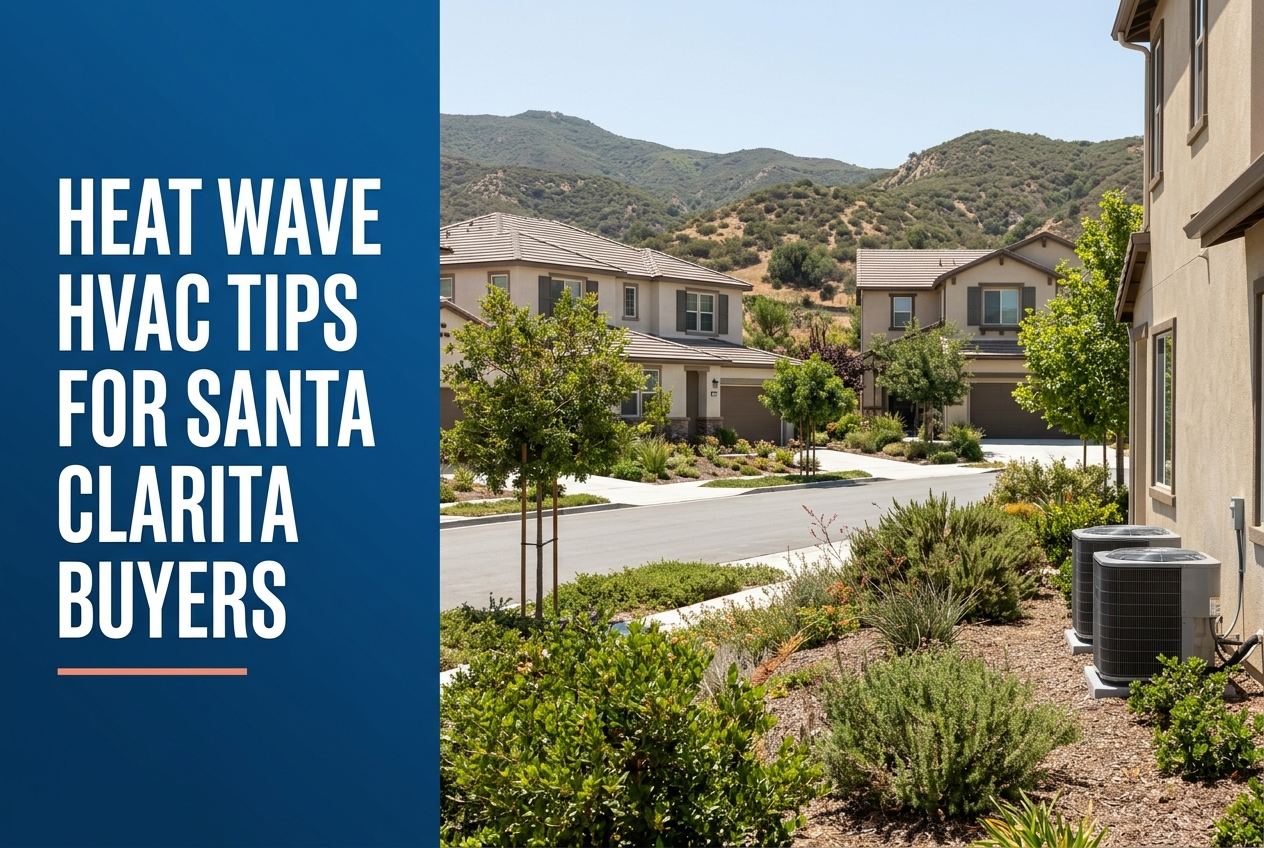
The outdoor condenser needs room to breathe. The Signal recommends clearing out weeds, shrubs, leaves, grass clippings, and other debris around the unit, and keeping plants at least two feet away. That is a simple detail, but it matters because the unit has to release heat from inside the home.
When we walk a property with a buyer, we look at the area around the unit the same way we would look at a roof edge or a drainage path. If the unit is boxed in by debris or plants, that may not mean the system is failing, but it does suggest that routine care has been light. Buyers can ask whether the owner has kept up with cleaning and service.
How often should filters be checked in hot weather?
During heavy use, checking HVAC filters monthly is a smart habit. The Signal says filters should be inspected monthly during periods of heavy use and replaced at least every three months, or sooner if they are dirty. It also notes that homes with children, pets, allergies, asthma, or more dust exposure may need more frequent changes.
For buyers, the main lesson is simple. A seller who can talk clearly about filter changes is showing you some level of home care. A seller who does not know when the filter was last changed may still have a fine system, but you should ask more questions. The filter is one of the easiest parts of the system to inspect, and it can tell you a lot fast.
What should buyers ask for during inspections and disclosures?
Ask for HVAC service records if they exist. You are not just trying to learn whether the system worked yesterday. You want to know whether it has been cleaned, checked, and maintained over time. A service record can help you see whether the home has had regular attention or only emergency repairs.
You can also ask when the last tune up happened, whether the filter has been replaced on a schedule, and whether the outdoor unit has been kept clear. These are plain questions, but they help you compare one home to another. In Santa Clarita and greater Los Angeles, buyers often focus on finishes. We think it is wise to also focus on the systems that keep the home usable when temperatures climb.
How do Santa Clarita communities fit into the buyer conversation?
Santa Clarita is not one neighborhood with one housing pattern. Buyers look across Valencia, Stevenson Ranch, Saugus, Newhall, Castaic, and Canyon Country, and each area can present a slightly different property setting. That is another reason it helps to look closely at HVAC care during a showing or inspection.
The practical point is simple. A home in any of these communities can have a system that needs basic attention, even if the rest of the property looks polished. When you compare homes, it helps to ask the same questions in each one so you can judge the cooling system on equal terms.
How does location and jurisdiction affect future HVAC changes?
Santa Clarita sits in Los Angeles County, and the City of Santa Clarita notes that it is about 30 miles north of Downtown Los Angeles. The city profile also describes Santa Clarita as a large incorporated city with many neighborhoods, while LA County Planning explains that county land use and zoning rules apply in unincorporated parts of the Santa Clarita Valley. That matters because where a home sits can affect future property decisions.
For a buyer, the practical point is this. Before you imagine future changes to the home, it helps to know whether the property is in the city or in unincorporated county territory. LA County Planning says land use and zoning describe how property can be used and what design requirements apply. If you later want to add or change equipment, those rules may become part of the conversation.
What does zoning have to do with an HVAC system?
On the surface, zoning and HVAC do not seem related. But when a buyer is planning ahead, the two can connect. LA County Planning explains that zoning is the set of regulations that lists allowable uses and design requirements, and that every property in the county has a specific zone. If a future project involves exterior equipment changes, additions, or other modifications, the property’s rules matter.
That is one reason we like buyers to think beyond the immediate inspection. A home may need a simple service today, but it should also fit your plans for tomorrow. If you are buying in Santa Clarita or elsewhere in Los Angeles County, understanding the basics of land use and zoning helps you ask better questions before you close.
Sources
- signalscv.com
- City of Santa Clarita: City Profile
- Los Angeles County Planning: Santa Clarita Valley Area Plan
- California Department of Insurance: Residential Insurance Guide
- SCV Water: Water Quality
- Los Angeles County Planning: Land Use and Zoning
If you want the practical version of this for your own situation, here is how we help buyers in Santa Clarita. If you have not settled on a neighborhood yet, our guide to Santa Clarita’s six communities is worth a look before you narrow your search.