2026-07-30 · 9 min read · Saugus · last reviewed 2026-08-01
By Michelle Dubner, REALTOR® · DRE #01496647 · Dubner Real Estate Group
What Saugus Sellers Should Highlight
How does highlighting nearby parks and trails help sell a home in Saugus?
How Saugus, Santa Clarita sellers can highlight nearby parks and trails to sell smart. A real strategy. Call 661-219-5517.
Part of Living in Saugus
Overview
Published by Michelle & Jon Dubner | Dubner Real Estate Group | Equity Union
If you are getting ready to list a home in Saugus, the way you market community life around that home can matter almost as much as the home itself. Michelle and Jon Dubner have watched Saugus buyers respond very differently to two kinds of listings: one that shows a house sitting on a lot, and one that shows a house as part of a real, walkable neighborhood here in Santa Clarita. This is not about tossing a park mention into your listing description. It is a genuine strategy, covering photos, wording, staging, timing, and pricing, that helps a buyer picture their own routine in your home, without ever overselling what is actually nearby.
Key Takeaways
- Choose photos that show the walk toward a park or trail, not just a straight-on shot of the front door.
- Describe proximity to parks, trails, and schools in honest, specific terms, never in vague or inflated language.
- Stage rooms to reinforce the daily routine a family near community amenities would actually live, not a generic showroom feel.
- Let recent closed sales set the price. Lifestyle proximity supports the story of a listing, it does not replace the comps.
If you are weighing a move, start with what your home is actually worth today.
What Photos Actually Earn Attention in a Saugus Listing?
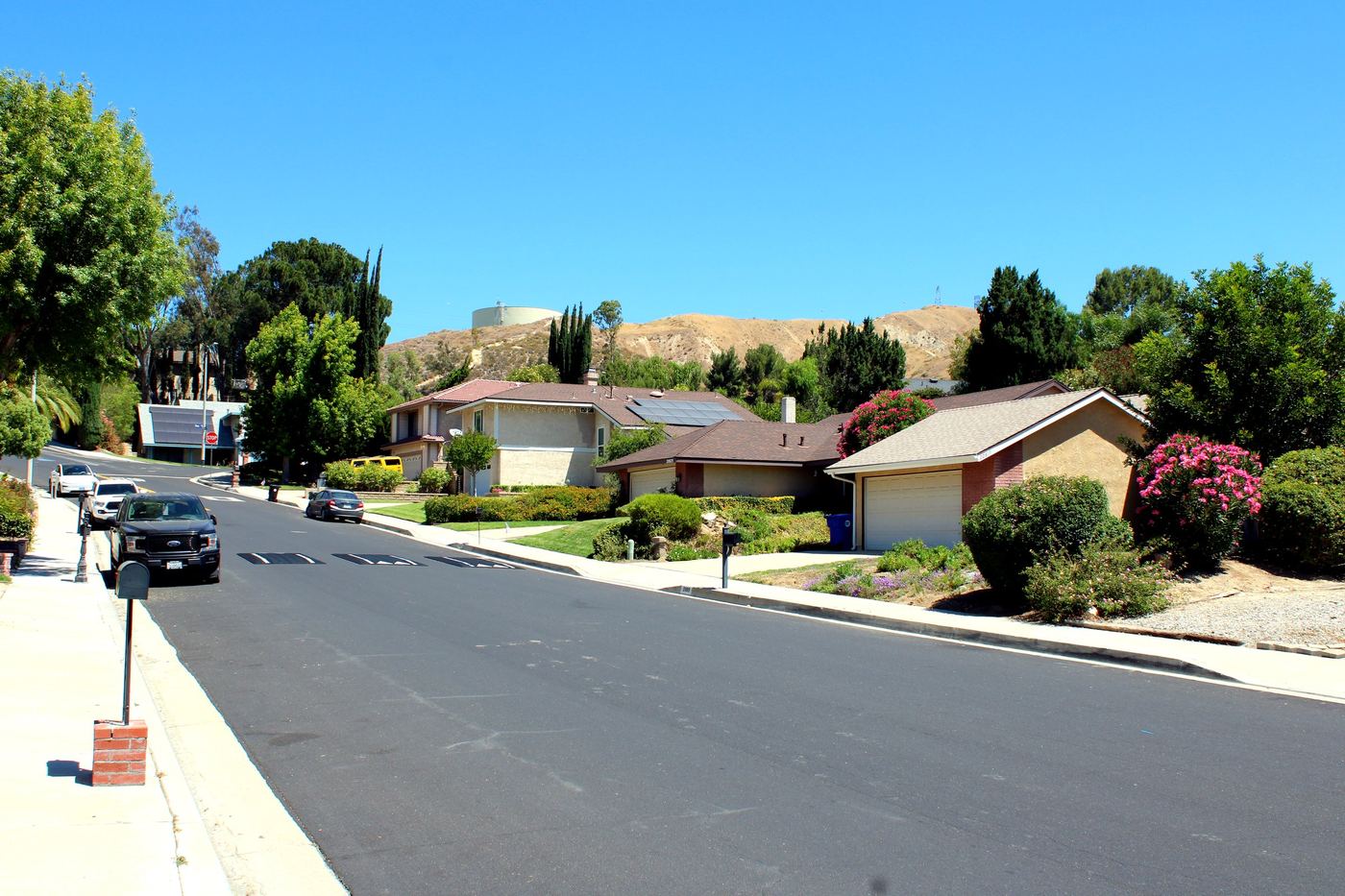
Most listing photo sets start and end at the house. A wide shot of the exterior, a few interior rooms, maybe a backyard. That is not wrong, but it is incomplete if your home sits on a street where neighbors are out walking, a park is a few blocks away, or a trailhead is an easy stroll from the driveway. A photo of the sidewalk leading down a tree-lined street toward a park entrance, taken in soft morning light, tells a buyer something a straight-on exterior shot cannot: this is a place where people actually go outside. The same is true for a wide shot of the street itself showing mature trees, sidewalks, and a sense of scale, rather than only a tight crop of the house.
The goal is not to manufacture a feeling that is not there. It is to include the two or three images that show what daily life on that street genuinely looks like, alongside the standard interior and exterior set. A buyer scrolling through a listing spends seconds on most photos. The ones that make them pause are the ones where they can picture themselves in the frame, not just evaluate square footage.
How Should You Describe Nearby Parks and Trails Without Overpromising?
This is where a lot of listing descriptions get sloppy, and it costs sellers real trust. "Steps from the park" should mean steps, not a ten minute walk. "Minutes from a trail" should be an honest estimate, not a rounded-down guess. Buyers who tour a home after reading an exaggerated proximity claim notice the gap immediately, and that gap follows them into negotiations. It plants a small seed of doubt about everything else in the listing.
The fix is simple and it actually reads better: be specific. Note the real walking distance or drive time to a park, trail, or school, and let the accuracy speak for itself. A precise, honest description, "a short walk to the neighborhood park" when it genuinely is a short walk, reads as more credible than a superlative, and it protects both the buyer's trust and your own reputation as a seller who told the truth from the first line of the listing.
Why Does Buyer Lifestyle Psychology Sell Harder Than a Spec Sheet?
A list of square footage, bedroom count, and lot size answers a buyer's questions. It does not move them emotionally. What moves a buyer is picturing their own life happening inside the listing, a morning walk before work, a weekend afternoon at a nearby park, a dog on a leash heading out the front door. That mental picture is what turns a home from "a house that meets my criteria" into "the house I want."
This is not a trick. It is simply matching the marketing to how people actually decide. Buyers weigh logic and emotion together, and a listing that only speaks to logic is leaving half the persuasion on the table. Framing community life honestly, through photos and specific, accurate language, gives a buyer permission to imagine their routine there, which is often the moment an offer starts to feel less like a decision and more like a certainty.
What Staging Choices Reinforce a Sense of Place?
Staging that supports a lifestyle-proximity story does not require new furniture. It requires intention in the details a buyer notices without consciously cataloging them. A tidy row of bikes in the garage instead of a jumble of boxes. An entry or mudroom organized for shoes and outdoor gear rather than cluttered with everything that does not have another home. A patio or backyard set up for actual use, chairs pulled together, not stacked against a fence.
These choices tell the same story the photos are telling: this is a home built around getting outside and being part of a neighborhood, not just a house that happens to be near a park. The staging and the photography should reinforce each other, not exist as two separate efforts. If your listing description mentions nearby trails, the staging should not contradict that with a house that reads as strictly indoor and formal.
When Should You Time Your Listing to Show Community Life at Its Best?
Timing matters more than most sellers expect. A weekday photo shoot at midday often shows an empty street, a quiet park, nothing wrong with the home itself but nothing that supports a lifestyle story either. A Saturday morning shoot, by contrast, can capture the same street with real signs of life, families out walking, a park with some genuine activity in the background, without ever needing to stage people who are not part of your listing.
The same logic applies to scheduling showings. If your home's story includes proximity to a park or trail, a weekend showing lets a buyer see that story in motion on their own, rather than reading about it and hoping it is true. Coordinate the photo shoot and, where possible, key showings around the times your neighborhood genuinely feels most alive.
Does Proximity to Parks and Trails Justify a Higher Asking Price in Saugus?
Lifestyle proximity is a real value driver, and it is worth a direct conversation with your agent about how it fits into your pricing strategy. But it is not a blank check. In a denser part of Los Angeles, walking distance to a park can add real, measurable value because that kind of access is scarce there. In Saugus, where many streets already sit close to parks and trails, the same feature is still meaningful, but it should never be used to justify pricing meaningfully above what is actually closing on comparable homes nearby.
The honest approach is to let the story support the price, not replace it. Your agent should be pulling real, recent closed sales for comparable homes, and lifestyle proximity should be discussed as part of the marketing narrative that helps the right buyer find and fall for your home, not as a justification for a number the recent sales do not support.
📍 See Dubner Real Estate Group on Google, homes for sale in Santa Clarita
Thinking about listing your Saugus home and want a second opinion on how to tell its story? We would be glad to walk your street with you and help you decide which parts of your home's location actually belong in the marketing.
Call or text: 661-219-5517
Michelle & Jon Dubner · Dubner Real Estate Group · Equity Union
If you want the practical version of this for your own situation, here is our Saugus area guide.